
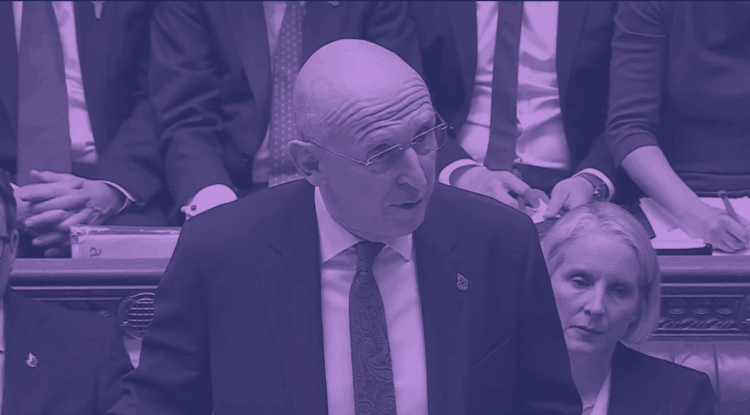
Yesterday, Chancellor John Healey revealed the UK Government’s Autumn Budget 2026, the first in his role as Chancellor of the Exchequer and under the premiership of the new Prime Minister Andy Burnham. The Budget promised to give families and businesses across the UK ‘breathing space’ amid rising inflation and cost of living pressures. But to what extent do the budget announcements support women in Wales, and how long will this ‘breathing space’ last?
We welcome the Chancellor’s cost of living support measures which offer some much-needed relief to women who continue to be hit hardest by the cost of living crisis. Deep-rooted inequalities in Wales mean that women are three times more likely than men to be economically inactive due to caring responsibilities. When in employment, women are more likely to be working in part-time, lower paid and precarious employment, resulting in a gender pay gap of 9.7% in Wales – an increase from 9% last year. These patterns mean that women in Wales have lower incomes than men and are more vulnerable to the impacts of rising costs.
Initial findings of our Wales Women’s Survey 2026 show that women in Wales have felt these impacts most acutely in the areas of food, energy and council tax. In this context, we are pleased to see cuts to the income tariffs on food items and the extension of zero VAT on household electricity bills until July 2027. Abolishing the standing charges on household gas bills is also encouraging, as is the announcement of the £100 energy support payment to households in Council Tax Bands A-D, which the Welsh Government has already committed to delivering to households in Wales. We are concerned, however, that the latter announcements will not come into force until 2027 at the earliest. In the context of rising inflation and increases to the energy cap forecasted for January, yesterday’s Budget does little to provide immediate support to those who are struggling.
Without immediate support, women in Wales will continue to be pushed further into debt and poverty. Given these ongoing pressures, the announced increases to National Living Wage and National Minimum Wage will provide some relief to the women on lowest incomes. Introducing a tax-free allowance for the new State Pension from 2027 will also help to protect the 1 in 6 single female pensioners who are currently living in poverty in Wales. Pre-announced measures such as ending the Carer’s Allowance cliff-edge and extending parental pay to self-employed fathers and partners are also welcome, and will help to ease the disproportionate burden of caring responsibilities carried by women across the UK. Yet again, however, the implementation timeline for these reforms is alarming, with the extension of parental pay not taking effect until 2029 and changes to the Carer’s Allowance earnings taper not due until 2030-31.
While necessary, cost of living support measures remain sticking plasters which only treat the symptoms of a broken system. Notwithstanding some positive announcements in the devolved areas of housing and Violence Against Women and Girls, the Chancellor’s Budget fell short of delivering meaningful investment in social infrastructure and addressing the underlying structural inequalities that make life unaffordable for women in the first place. This includes the Chancellor’s decision to not unfreeze the Local Housing Allowance, which would have provided much-needed relief to women and low-income households struggling to keep up with rising rents. Further, while the extension of parental pay to both partners is a step in the right direction, maternity pay in the UK remains wholly inadequate, falling below the National Living Wage and pushing families – particularly single mothers – further into debt and financial hardship. It is also disheartening to see that Budget did not include a tax exemption for the Welsh Government’s new proposed child poverty payment Cynnal, which risks delaying the scheme and preventing families from accessing much-needed financial support. The absence of meaningful announcements on childcare and social care was similarly lamentable, representing a missed opportunity to strengthen the essential services women rely on and address the disproportionate burden of unpaid care that continues to entrench their unequal economic position.
The lack of investment in social infrastructure is particularly concerning in the context of the funding pressures facing Wales. While the UK Government announced an additional £450 million in consequential funding for Wales, the Welsh Government has argued that this is insufficient to offset wider budgetary pressures and will necessitate difficult choices and potential cuts in their own Budget on the 17th of November. Due to their unequal economic position, women in Wales are more reliant and more likely to work within public services. We can therefore expect that women will bear a disproportionate cost of these decisions, widening existing gender inequalities in Wales. In the context of lower consequential funding for public services, the absence of any devolution of further fiscal levers to the Welsh Government in yesterday’s announcement is highly regrettable.
In conclusion, the Chancellor’s cost-of-living relief is welcome, but it cannot compensate for delayed support, underfunded social infrastructure and a lack of fiscal power for the Welsh Government to respond to women’s needs. It remains to be seen how much of this ‘breathing space’ will be sustained through the Welsh Government’s Draft Budget on 17th November, and whether women’s needs will be prioritized within these set financial constraints.